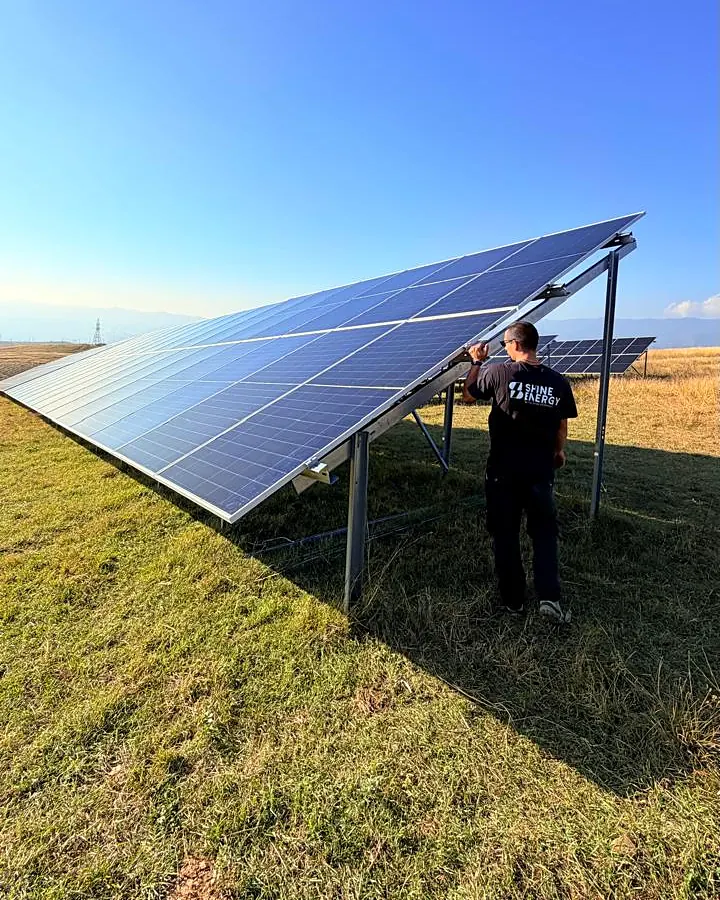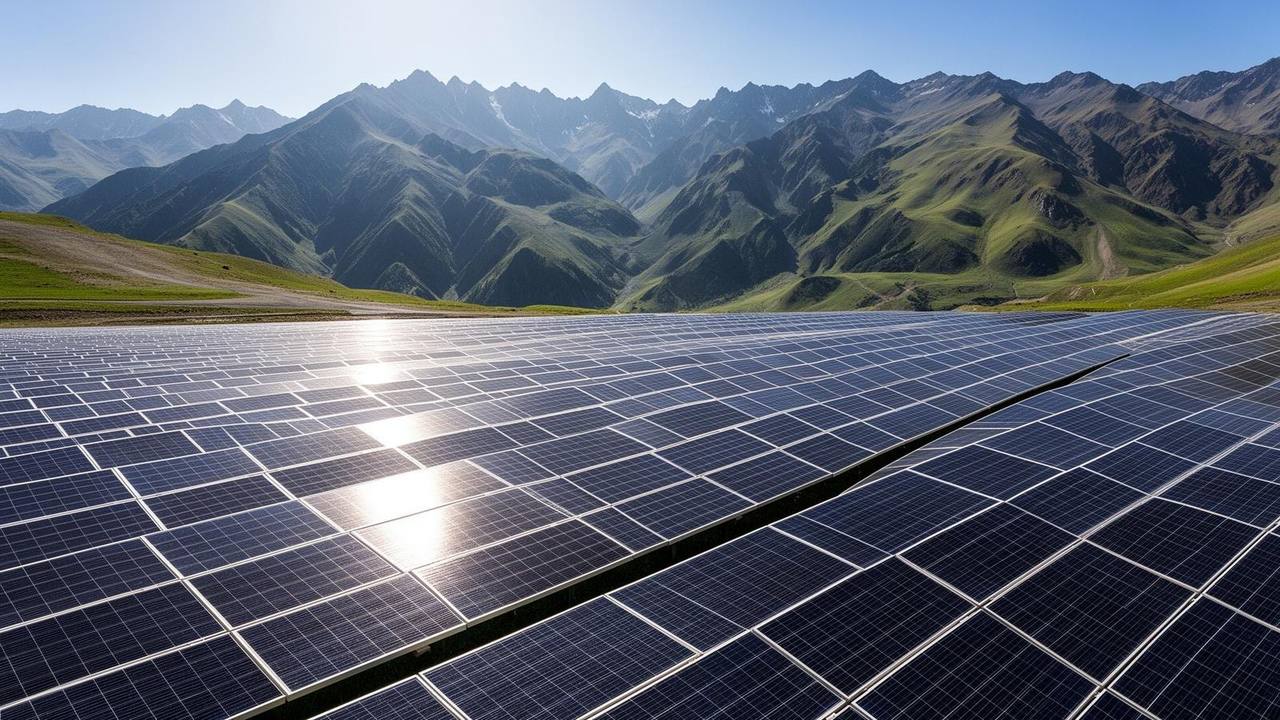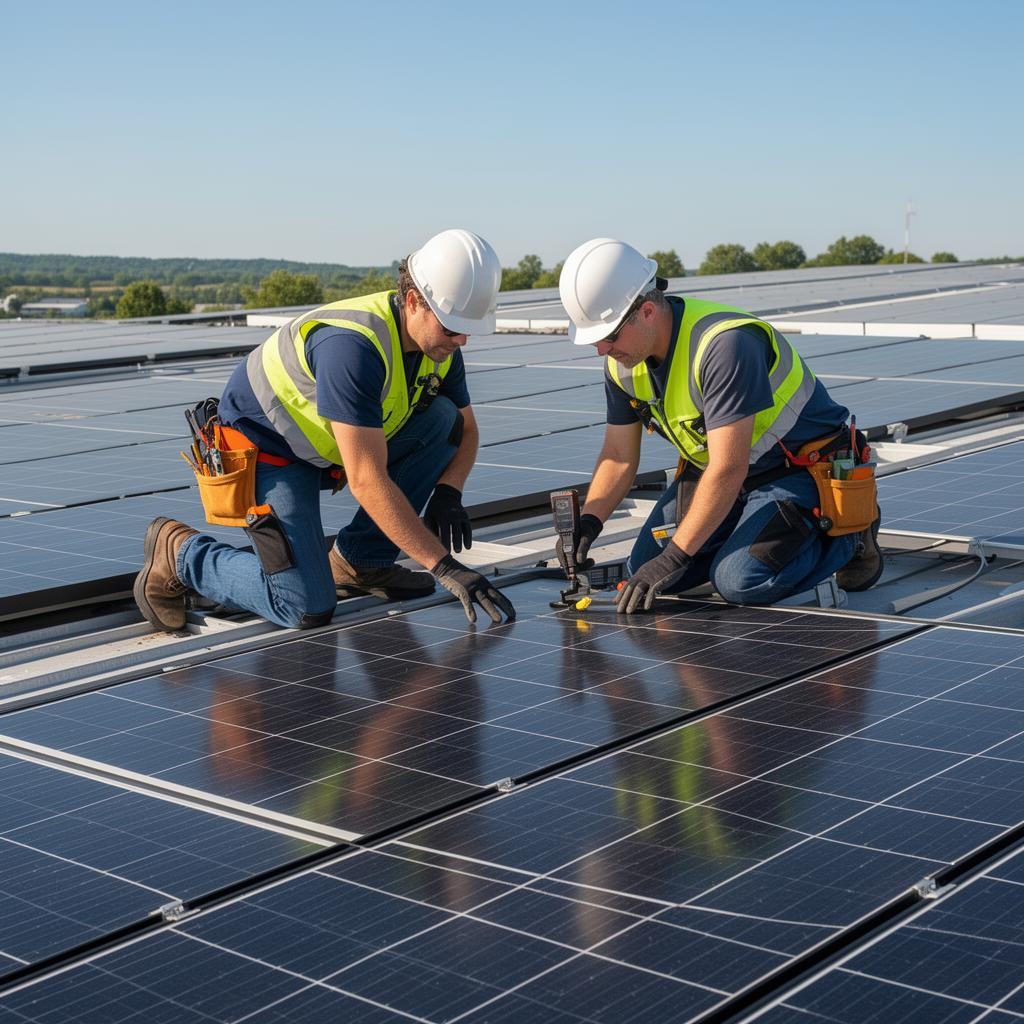

A solar plant has no fuel and few moving parts, but it is not maintenance-free. Dirt, snow, hail, loose connections and a failed inverter can quietly take 5–15% off a year's output, and in Georgia's climate each of these is a real risk. This guide covers what operation and maintenance (O&M) involves for a home system, a business rooftop and a ground-mounted plant: cleaning, winter care, hail, monitoring, inverters, insurance and what to put in an O&M contract. Information is as of November 2026.
What solar O&M covers
| Task | Home rooftop (3–15 kW) | Business or ground plant (50 kW and up) |
|---|---|---|
| Check output in the monitoring app | Monthly | Daily (alarms), monthly report |
| Visual inspection (panels, cables, mounting) | Once a year | Every 6 months, and after storms or hail |
| Cleaning | When output drops noticeably; often once or twice a year | Planned from soiling data; typically 2–4 times a year in dusty areas |
| Inverter check (fans, filters, error log) | Once a year | Every 6 months |
| Thermal imaging of panels and connections | Only if there is a fault | Once a year |
| Electrical tests (insulation, earthing, string checks) | Every few years or after a fault | Once a year |
| Vegetation, fencing, drainage | Not applicable | Seasonal |
Two kinds of work make up O&M. Preventive maintenance is the scheduled list above. Corrective maintenance is fixing faults when they appear: a tripped breaker, a burnt connector, a dead inverter. A good operator keeps both short, because every day a string or inverter is down is lost revenue.
Cleaning: how often and how
Dust, pollen, bird droppings and pollution are the most common cause of lost output. The International Energy Agency's PV programme estimates that soiling costs solar plants 4–7% of their energy on average worldwide (IEA PVPS). Losses are much higher at dusty sites and on panels with a low tilt, and lower where regular rain washes tilted panels.
In Georgia the main sources are dry summer dust in Kvemo Kartli, Shida Kartli and Kakheti, dust from nearby gravel roads, quarries and fields, spring pollen, and bird droppings on panels near rivers and reservoirs. Western Georgia's frequent rain keeps panels cleaner, but humidity encourages moss and lichen on the frame edges of low-tilt panels.
When to clean. Do not clean by the calendar alone. Compare actual output with the expected output for the same sunshine, or, at a larger plant, compare a cleaned reference string with a dirty one (or use a soiling sensor). Clean when the value of the lost electricity over the next few months is higher than the cost of a cleaning visit. For most homes this means once or twice a year, usually after the dry summer.
How to clean safely:
- Follow the module manufacturer's cleaning instructions; the wrong method can void the warranty.
- Use soft brushes or sponges and clean, ideally demineralised, water. Hard tap water can leave mineral marks.
- No pressure washers, abrasive pads or strong detergents.
- Clean early in the morning or in the evening. Do not spray cold water on hot panels.
- Never walk on panels. On roofs, use fall protection or hire a team that does; most accidents in rooftop solar are falls, not electric shocks.
Snow and winter
Snow on a panel stops output, but on tilted panels it usually slides off within a day or two of sunshine, and cold panels are more efficient once clear. In Tbilisi and the eastern lowlands, heavy snow is rare. At high-altitude sites such as the Javakheti plateau and in mountain regions it is a design issue: choose panels and mounting rated for the local snow load (5,400 Pa front load is common on datasheets), leave enough ground clearance for snow to slide off, and use a steeper tilt.
In winter:
- Do not scrape snow with shovels or metal tools; they scratch the glass and its anti-reflective coating. A soft roof rake from the ground is fine; often the best option is to wait.
- Check after heavy snowfalls for bent frames or rails, especially on the lower rows where snow piles up.
- Keep winter in proportion. December and January produce only a small part of a Georgian plant's annual output, so a few snowy days cost little.
Hail and storms
Standard panels pass the IEC 61215 hail test (25 mm ice balls at about 23 m/s), but larger hail can crack the glass or the cells. Hail is a real risk in parts of eastern Georgia, especially Kakheti, where the state operates an anti-hail system (source). For sites there, see our guide to panel types and hail ratings.
After a hail storm or strong wind:
- Check the monitoring data. A sudden drop in one string or inverter points to damage.
- Inspect visually for broken glass, bent frames and loose clamps. Broken panels can be live: do not touch them.
- Test for hidden damage. Micro-cracks are often invisible. Thermal imaging (by drone at larger plants), I-V curve tests and, if needed, electroluminescence (EL) imaging show which panels are damaged.
- Document everything (photos, dates, monitoring data) before repairs. Insurers and panel manufacturers ask for it.
Monitoring: the cheapest maintenance tool
Every modern inverter comes with an online portal. Use it.
- Compare actual and expected output. In central and eastern Georgia a well-built system produces about 1,250–1,350 kWh per kWp a year, in western Georgia about 1,100–1,200 (PVGIS). Our solar calculator gives the expected figure for your city.
- Watch the performance ratio (PR) at larger plants: actual output divided by what the sunshine could have produced. A falling PR shows soiling, faults or degradation before they show on the bill.
- Compare strings and inverters. In a healthy plant, identical strings produce almost identical output. A string that lags by more than a few percent needs a look.
- Set alarms for inverter faults, grid outages and communication loss, and make sure someone reads them.
Inverters and electrical parts
The inverter is the component most likely to fail during a plant's life. Panels often carry 25–30-year performance warranties, while inverter warranties are usually 5–10 years (often extendable), and many inverters need replacing at least once over 25–30 years. Budget for it.
Once a year, at business and ground plants:
- clean inverter fans and filters, and read the error log;
- check that cable connections and terminals are tight (loose connections overheat; thermal imaging finds them);
- check connectors (MC4-type) for burn marks; never mix connector brands;
- test earthing and surge protection, which matter in a country with frequent summer thunderstorms;
- test insulation resistance and string voltages and currents.
Electrical work must be done by a qualified electrician. The international standard IEC 62446-1 sets out the tests and documentation for grid-connected PV systems; a good contractor works to it.
Degradation: what is normal
Panels lose a little output every year. A large review of field data by the US National Renewable Energy Laboratory found a median degradation rate of about 0.5% per year (source). Modern n-type panels are often warranted to lose less (check the datasheet). Faster losses usually point to a defect, such as potential-induced degradation, hot spots or water ingress, and are worth investigating while the product warranty still runs.
Insurance
For a home system, ask your property insurer whether the panels are covered under your home policy, including hail and storm. For a business or a plant, the usual package is:
| Cover | What it pays for |
|---|---|
| Property (all risks) | Damage from hail, storm, fire, lightning, theft and vandalism |
| Machinery breakdown | Sudden electrical or mechanical failure (for example an inverter) |
| Business interruption | Lost revenue while the plant is down after an insured event |
| Third-party liability | Damage or injury caused to others |
Lenders normally require property and business interruption cover for financed plants. Read the exclusions and deductibles: some policies exclude gradual wear, micro-cracks found later, or theft without forced entry.
What does O&M cost?
There is no published Georgian benchmark. For reference, in the United States NREL's Annual Technology Baseline uses about $22–24 per kW (AC) per year for a 100 MW utility-scale plant, covering maintenance, monitoring, insurance, asset management and site costs, and reports a wide range of about $0–40 per kW (DC) per year across the market (NREL ATB). In Georgia, labour for cleaning and site work costs less, while spare parts, inverters and insurance are priced in dollars or euros. Small rooftop systems cost more per kW, because each visit has a fixed cost.
For a home system, maintenance mostly means checking the app and paying for an occasional cleaning visit. For a commercial plant, ask installers for a fixed annual O&M price per kW with a clear scope.
What to put in an O&M contract
- Scope: preventive tasks and their frequency, cleaning (how many visits are included), vegetation, security.
- Response and repair times for faults, with longer times allowed only for parts that must be imported.
- Availability guarantee: the minimum share of time the plant must be able to run, with compensation if it is missed.
- Spare parts: who holds them (panels of the same model, fuses, connectors, a spare inverter or key boards).
- Reporting: monthly report with output, PR, availability, faults and actions.
- Warranty handling: the contractor manages claims with panel and inverter manufacturers.
- Safety and qualifications of the staff, and who is responsible for insurance during work.
Buying an operating plant? O&M records are one of the first things to check; see our due diligence guide.
Frequently asked questions
How often should solar panels be cleaned in Georgia? For most homes, once or twice a year, usually at the end of the dry summer, or whenever output drops noticeably against the expected level. Plants in dusty parts of eastern Georgia may need 2–4 cleanings a year; let the monitoring data decide.
Can I clean solar panels with tap water? Yes, with a soft brush and low pressure, but hard water can leave mineral marks. Demineralised water is better. Avoid detergents and pressure washers, and do not spray cold water on hot panels.
Do solar panels need maintenance in winter? Very little. Let snow slide off, do not scrape it with metal tools, and check the mounting after heavy snowfalls.
What happens if hail breaks a panel? Keep away from broken panels (they can still be live), take photos and call your installer. Damaged panels should be replaced with the same or a compatible model. Hail damage is usually covered by property insurance, not by the manufacturer's warranty.
How long do inverters last? Typically 10–15 years. Most plants replace inverters at least once over the life of the panels, so it is worth budgeting for it from the start.
How much do solar panels lose each year? About 0.5% a year on average for good-quality panels, according to NREL field data. Check the performance warranty on your panels' datasheet.
Running a plant or planning one? See our solar panel price guide and our solar advisory services, or get in touch.