In Georgia, a power plant earns nothing until it is connected, and the connection is often the slowest step of a project. Who you apply to depends on the plant's size and voltage: the distribution company (Telasi in Tbilisi, Energo-Pro Georgia in most regions) or the transmission operator GSE. This guide explains each route, the official fees and deadlines, and how to avoid the usual delays. Rules and fees are as of October 2026.
Who connects your plant
| Plant | Network | Apply to | Main rules |
|---|---|---|---|
| Micro power plant, up to 500 kW | Distribution (0.4–10 kV) | Telasi or Energo-Pro Georgia | GNERC Resolution No. 19 of 2021, Articles 21–22; net metering |
| Small power plant | Distribution | Telasi or Energo-Pro Georgia | GNERC Resolution No. 19 of 2021, Chapter XVI¹ (source) |
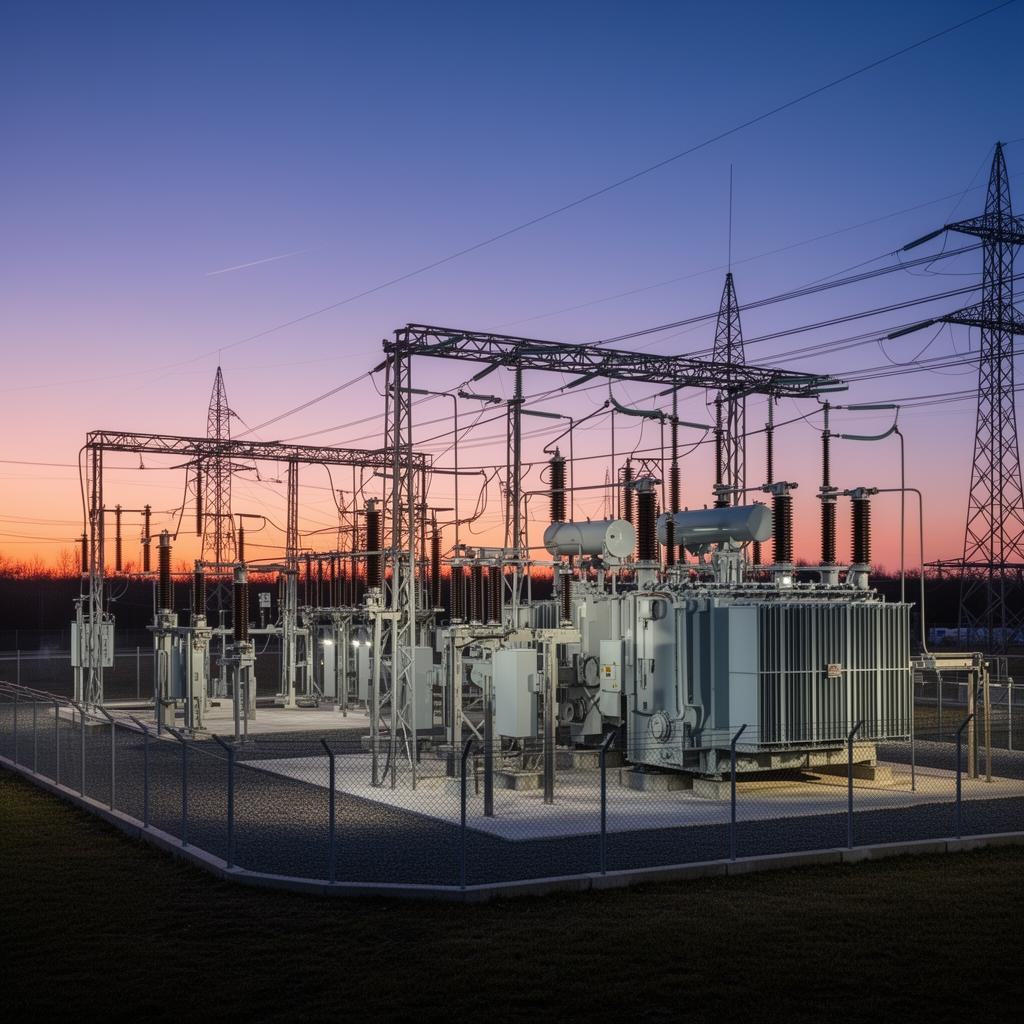
| Larger plant | Transmission (35–500 kV) | The transmission licensee (GSE), with the dispatch licensee | Network Code, Chapter II (source) |
The regulator, GNERC, approves the application forms, the standard contract terms and the fees for all three routes.
Route 1: micro power plants up to 500 kW
- Apply online. For Telasi, register on my.telasi.ge and choose the micro power plant connection service; the page shows the fee, the deadlines and the GNERC application form (source).
- Pay 50% of the connection fee before you submit; the rest is due within 5 days of completion (source).
- Completeness check within 10 working days.
- Inspection and metering. The company checks the connection scheme and automatic controls and installs a two-way or smart meter.
Check the quota first. Microgeneration on a distribution network is capped at 20% of the network's peak load. Telasi's website states that 20% of the peak load on its network is already taken, with an actual microgeneration coefficient of 20.01% (source). Ask the operator about capacity at your substation before you buy land or equipment.
Route 2: small power plants on the distribution network
Connecting a small power plant to the distribution network takes two stages (source):
- Application. You submit the GNERC application form with the required documents and proof of payment of the fee.
- Technical conditions and testing. The system operator prepares and issues the connection offer with technical conditions, the parties sign the connection contract, and the connection is completed once compliance testing is passed.
GNERC has approved two standard contract versions: one where the plant ties into the operator's line, and one where a connection bay is built at the operator's substation (source).
Distribution connection fees
GNERC sets standard fees and deadlines for new connections to the distribution network by voltage and capacity. Selected bands (GEL, including VAT; deadlines in working days) (source):
| Voltage | Capacity | Deadline: cities / other municipalities | Fee |
|---|---|---|---|
| 0.4 kV | up to 10 kW (380 V) | 40 / 60 | 2,000 |
| 0.4 kV | 30–50 kW | 40 / 60 | 14,000 |
| 0.4 kV | 80–100 kW | 40 / 60 | 28,000 |
| 0.4 kV | 150–200 kW | 45 / 60 | 80,000 |
| 0.4 kV | 320–500 kW | 60 / 90 | 167,500 |
| 0.4 kV | 800–1,000 kW | 90 / 110 | 270,000 |
| 6–10 kV | 1–500 kW | 60 / 90 | 130,000 |
| 6–10 kV | 500–1,000 kW | 90 / 110 | 200,000 |
| 6–10 kV | 1,000–1,500 kW | 90 / 110 | 287,000 |
| 6–10 kV | 3,000–5,000 kW | 90 / 120 | 749,000 |
Connecting at 6–10 kV is usually cheaper per kW than at 0.4 kV for plants of a few hundred kW and more. Confirm with the operator which band and scheme apply to your plant.
Route 3: connecting to the transmission grid (GSE)
Larger plants connect to the high-voltage grid. The process has two phases (source):
- Phase I: application and offer. You apply to the transmission licensee with the documents required by the Network Code and pay the phase I fee, which depends on the voltage. The transmission and dispatch licensees review the application and send a connection offer or a reasoned refusal.
- Phase II: agreement, works and testing. You sign the connection agreement with the transmission and dispatch licensees and pay the phase II fee within 20 working days. The works are carried out, the dispatch licensee approves the technical design, and the equipment is tested.
Key points:
- The offer contains everything you need for financing: technical requirements, estimated connection dates, the fee table and the draft agreement. It lapses if the agreement is not signed within 3 months.
- Two standard options: a connection bay at the transmission substation, or tying into an existing transmission line. In both cases the bay, line extension and metering become the property of the transmission licensee, and SCADA equipment belongs to the dispatch licensee.
- Fees are set for 500, 400, 330, 220, 110, 35 and 6–10 kV. For 500, 400 and 330 kV and for 6–10 kV, the phase II fee is based on the transmission licensee's cost estimate.
- Refusals must be based on technical-economic criteria agreed by GNERC in 2017, for example no free capacity at the nearest substation or line.
- The connection agreement follows standard conditions approved by GNERC, and its term is agreed by the parties (source).
GSE publishes free capacity at its substations and a connection fee calculator on its website. Check both before choosing a site.
Grid capacity is the real constraint
Georgia's grid can absorb only so much variable generation. GSE has limited new solar capacity to 0.5 GW (source), and its ten-year plan lists 31 solar plants for possible commissioning in 2026, most of them in Kakheti (source). On the distribution side, the 20% microgeneration limit is close to full in parts of the network. Read more about Georgia's grid and transmission projects.
How to avoid delays
- Ask for capacity before you buy land. Free capacity at the nearest substation decides whether a site works.
- Apply early and sign on time. The connection offer sets the capacity, route, cost and date; a transmission offer expires after 3 months.
- Budget for the line. Land rights and permits for the connection line can take as long as the plant itself; see our permitting guide.
- Plan the testing. Protection settings, SCADA and metering must pass compliance testing before the plant can export.
- Do not build ahead of the grid. A finished plant waiting for a connection earns nothing while its loan accrues interest.
Frequently asked questions
Who connects a solar plant to the grid in Georgia? Plants on the distribution network connect through Telasi in Tbilisi or Energo-Pro Georgia in most regions. Larger plants connect to the transmission grid through the transmission licensee (GSE) together with the dispatch licensee.
How much does it cost to connect a 500 kW plant to the grid in Georgia? GNERC's standard fee for a new 320–500 kW connection at 0.4 kV is GEL 167,500, and for 1–500 kW at 6–10 kV it is GEL 130,000, including VAT. Your own line and equipment cost extra.
How long does a grid connection take? GNERC's standard deadlines for distribution connections range from 40 to 120 working days depending on capacity, voltage and location. In practice, capacity checks, permits and testing often add months.
Can the grid operator refuse a connection? Yes, if there is no free capacity at the nearest substation or line or the connection would endanger the system, based on criteria agreed by GNERC.
Planning a plant, or buying one that is still waiting for its connection? See our solar farm development guide, our due diligence guide for buying a solar plant, or contact us.